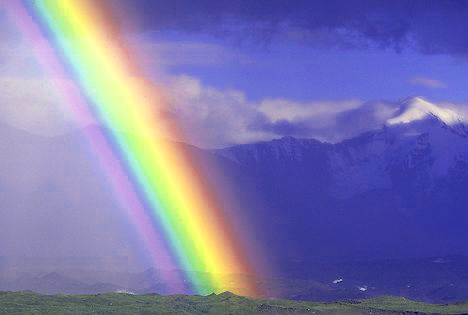
The rainbow is one of the most beautiful that nature provides the Secretary. In fact, their beauty has inspired countless people in many fairy tales, songs and legends, is so amazing. It has most of the writers behind the stories is entirely a good bet to be a magic show by the rainbow effect - most people are like today. However, the science of the rainbow is really very simple. This is just basic optics!
In the rectum of the rainbow is the refraction process. Refraction is the "bending" of light. If you're wondering how to bend light, it is a good question. It is to change the direction of the end is probably more accurate. When the light to travel from one medium to another, the direction of change, but most of the people see "bending." This problem occurs because of light travel at different speeds in other media.
To understand why light bends just went grocery shopping with a parent Imagine Cart is pushing the cart to the cart return "area, so you in the parking lot of a shopping cart pushing and parking for one" medium "is the speed of the cart, if you exert a constant force. the through travel, it depends on the medium - in this case, the pavement surface of the parking lot "
Now, I suppose, and in the parking lot next to the grass area that you decided to do a bit of a detour to go through. What happens when you push the cart out of the parking lot, the grass in the area, what happens? Lawn cart the other is the "middle". Grass medium because it provides more resistance, you are right on the grass, pushing a cart, the cart is simply speed. Takes more energy to move a shopping cart.
But you pushing a cart on the grass at an angle, something else happened when the right wheels for the first time to query the pool. While on the road, the left wheel will slow down the speed of the right wheel, left wheel some more move to the right wheel is moving more quickly because it has a pool and cart to the right changes. You when you move the angle from the lawn area, paved areas, wheel speed and another before the cart turns on.
Similarly, a beam of light is when you enter the glass peurijeumreul. Simplification, but it think this way: other, so before the beam at the boundary between air and glass, lightwave side down slows. One another before it's shut down when the prism because of the speed of (some of the light is actually reflecting prism surface, but most of the pass). Is light again.
In addition, the overall bending light, a prism to separate white light into component colors. Has it different frequencies travel at different speeds, causing different colors of light when they move through the problem.

Move more slowly in the glass when delivered to the air in the glass, the speed difference is more serious because the colors bend more sharply. Will it bend less sharply on the glass more quickly because there are a lot of moving color and does not slow down. People to pass through the glass into this way of colors that make white light are separated depending on the frequency. Prism, as shown in the glass bends the light twice, if you than the easily distinguished colors can be seen. This is called distributed.
Droplets of rainwater as a prism and refract light in a manner to be distributed. The right conditions, this refraction to form a rainbow.